Buying a home in Atlanta is a major investment, and even a property that looks beautiful during a showing can have problems hidden in areas most buyers never see. A professional Atlanta home inspection can help identify visible defects and safety concerns before you move forward with your purchase.
At Crimson Home Inspections, we inspect homes throughout Atlanta and surrounding Georgia communities. From older homes to newer construction, certain problems appear more frequently than buyers might expect. Here are 15 common issues that may be discovered during an Atlanta-area home inspection.
1. Aging or Damaged Roofing
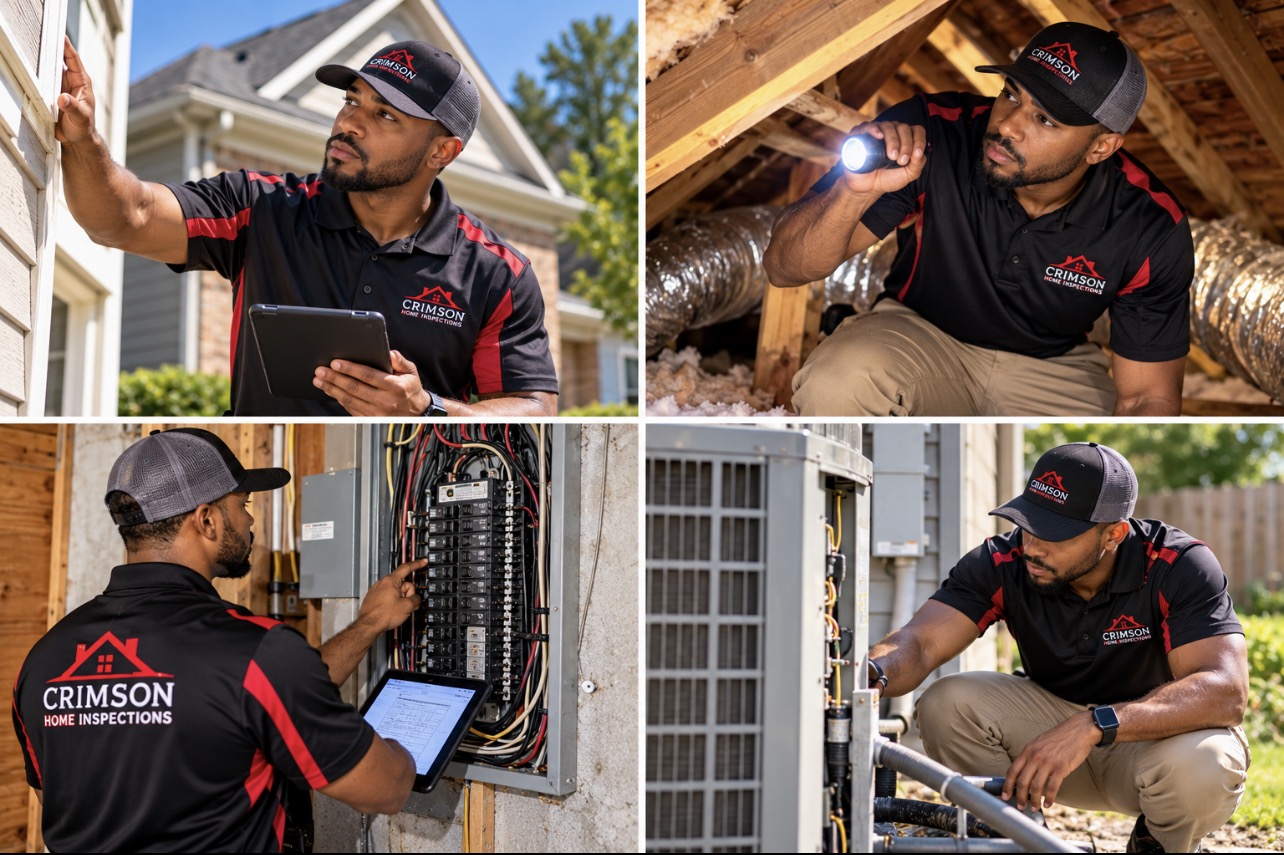
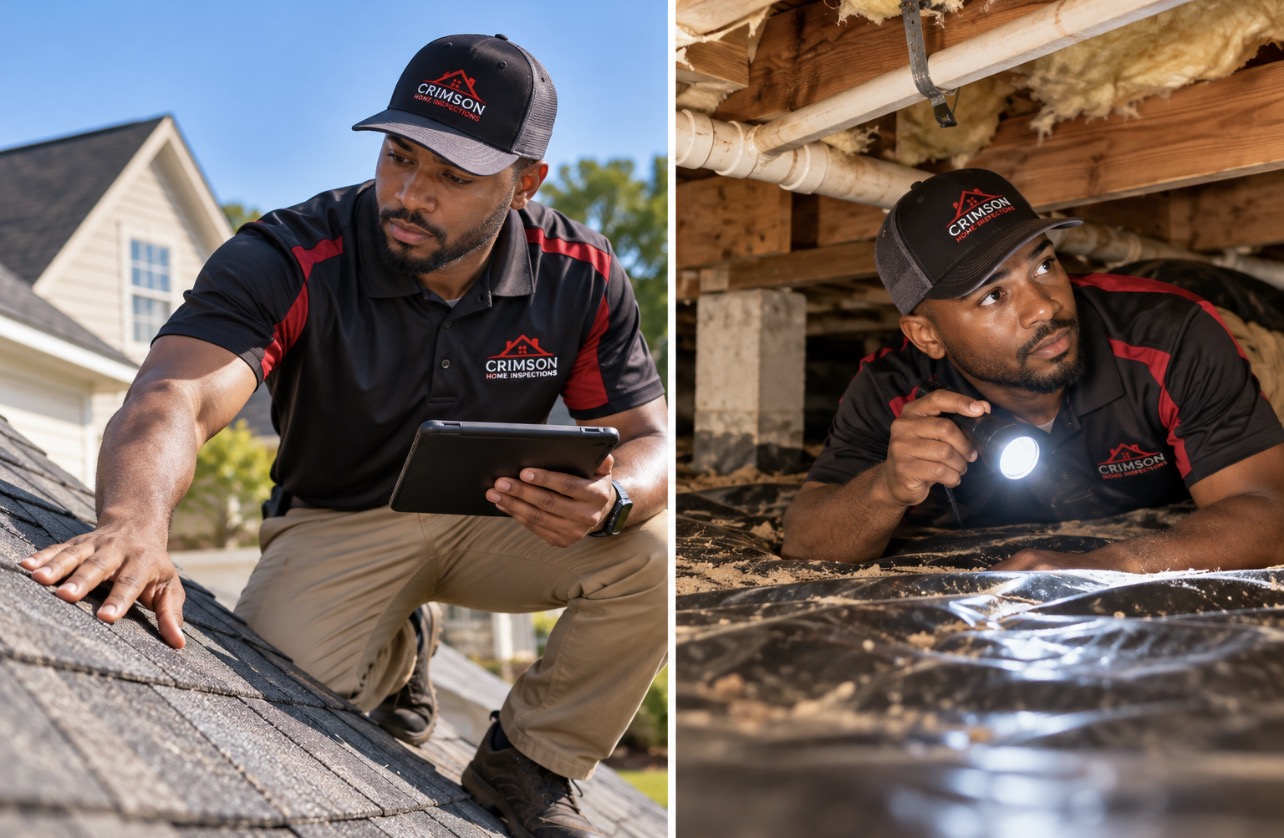
Roof problems are among the most important issues to identify because water intrusion can eventually affect numerous parts of the home. Common observations may include damaged or missing shingles, deteriorated roofing materials, exposed fasteners, flashing concerns, damaged pipe boots, previous repairs and signs that the roof may be approaching the end of its useful service life. Inspectors may also find evidence of previous leakage inside the attic, even when there are no obvious stains on the finished ceilings.
2. Poor Drainage Around the Foundation
Water should be directed away from the home’s foundation. Improper grading, clogged gutters, disconnected downspouts and poor drainage can allow water to collect near the house. Over time, excessive moisture around the foundation may contribute to crawlspace moisture, settlement or other problems. Atlanta’s periods of heavy rainfall make proper drainage especially important.
3. Foundation Cracks or Movement
Not every foundation crack indicates a major structural problem. However, certain cracking patterns, displacement, settlement or movement may require additional evaluation. A home inspector evaluates visible and accessible foundation components and looks for conditions that could indicate movement or deterioration. When significant concerns are observed, evaluation by a qualified structural professional may be recommended.
4. Crawlspace Moisture
Crawlspaces are extremely important areas to inspect in Georgia homes. Moisture can originate from plumbing leaks, poor exterior drainage, groundwater and moisture coming from exposed soil. Excessive crawlspace moisture can contribute to wood deterioration, damaged insulation, odors and conditions favorable for microbial growth. A dedicated article on crawlspace problems can provide buyers with a deeper understanding of these conditions.
5. Electrical Panel Problems
The electrical panel is one of the most important components of a home’s electrical system. During an inspection, problems may include improperly installed conductors, questionable modifications, damaged components, corrosion, missing covers or other visible electrical concerns. Electrical defects can present potential safety hazards and should be evaluated or repaired by a qualified electrician when necessary.
6. Missing GFCI Protection
Ground-fault circuit interrupters, commonly called GFCIs, provide additional electrical protection in areas where electricity may come into contact with moisture. Inspectors commonly evaluate accessible receptacles in kitchens, bathrooms, garages, exterior locations and other applicable areas. Older Atlanta homes may not have all of the electrical safety improvements commonly found in newer construction.
7. Aging HVAC Systems
Heating and cooling equipment deserves careful attention when buying a home in Georgia. Atlanta’s long cooling season can place significant demand on air-conditioning equipment. An older HVAC system isn’t automatically defective, but buyers should understand its approximate age and visible condition. An inspection may reveal corrosion, damaged refrigerant-line insulation, condensate drainage problems, dirty components, damaged equipment or other visible concerns. Knowing the approximate age of the equipment can also help buyers prepare financially for eventual replacement.
8. Plumbing Leaks
Even relatively small plumbing leaks can cause significant damage when they’re allowed to continue unnoticed. Inspectors evaluate accessible plumbing components and look for leakage around supply lines, drains, sinks, toilets, tubs, showers and water heaters. Water staining may also indicate a previous leak that deserves further investigation.
9. Water Heater Problems
A water heater can have issues even when it appears to be producing hot water correctly. Depending on the installation, inspectors may identify corrosion, leakage, venting concerns, improperly installed components or other visible deficiencies. Because some water-heater issues involve safety concerns, recommended repairs should not be ignored.
10. Attic Ventilation and Insulation Problems
An attic can reveal conditions that aren’t visible from the living areas. During an inspection, accessible attic components may show roof leakage, damaged sheathing, insulation deficiencies, ventilation concerns, improperly terminated exhaust ducts or other issues. Attic conditions can also provide important clues about the overall performance of the roof and building envelope.
11. Moisture and Suspected Microbial Growth
Moisture problems can occur in crawlspaces, attics, bathrooms, around plumbing fixtures and near areas of previous leakage. When suspicious growth is observed, determining and correcting the underlying moisture source is extremely important. Simply cleaning a visible area without correcting the water or humidity problem may allow the condition to return.
12. Damaged Siding, Fascia and Exterior Trim
The exterior of a house is its first line of defense against weather. Inspectors frequently discover deteriorated siding, damaged trim, peeling finishes, rotted wood, damaged fascia and openings around exterior penetrations. These problems may allow moisture to reach materials behind the exterior covering if they’re not properly repaired.
13. Deck and Stair Safety Problems
Decks and exterior stairs contain numerous structural and safety components. Inspectors may identify loose or deteriorated deck boards, unstable stairs, damaged railings, questionable support components, improper attachments or wood deterioration. Because decks are elevated structures that support people, significant defects should receive prompt attention.
14. Window and Door Problems
Windows and doors can reveal much more than cosmetic wear. Common observations include difficult operation, damaged components, deteriorated exterior trim, failed seals and signs of water intrusion.
Exterior doors may also have damaged framing, weather-related deterioration or safety concerns.
15. Previous Repairs That Were Not Properly Completed
One of the more interesting things inspectors encounter is evidence of previous repair work. Homes change over time. Owners replace roofs, modify plumbing, add electrical circuits, repair foundations, finish basements and remodel rooms. Unfortunately, not every repair is performed correctly. A professional inspection may identify visible conditions associated with previous modifications that warrant correction or further evaluation.
Why a Home Inspection Matters Before Closing
No home is perfect, and a home inspection isn’t designed to produce an overwhelming list of cosmetic imperfections. The goal is to provide buyers with a better understanding of the visible and accessible condition of the property at the time of inspection. Finding problems before closing can help you make a more informed purchasing decision, understand potential repairs and maintenance, and determine whether additional evaluation by specialized contractors may be appropriate.
If you’re considering purchasing a home, learn more about our home inspection services and pricing. You can also learn more about Crimson Home Inspections and our approach to inspecting Atlanta-area homes.
Schedule Your Atlanta Home Inspection
Don’t wait until after closing to discover problems that could have been identified during the inspection process. Whether you’re purchasing an older Atlanta home, newer construction, townhouse or single-family property, Crimson Home Inspections can help you better understand the property you’re buying. Schedule your home inspection with Crimson Home Inspections.